


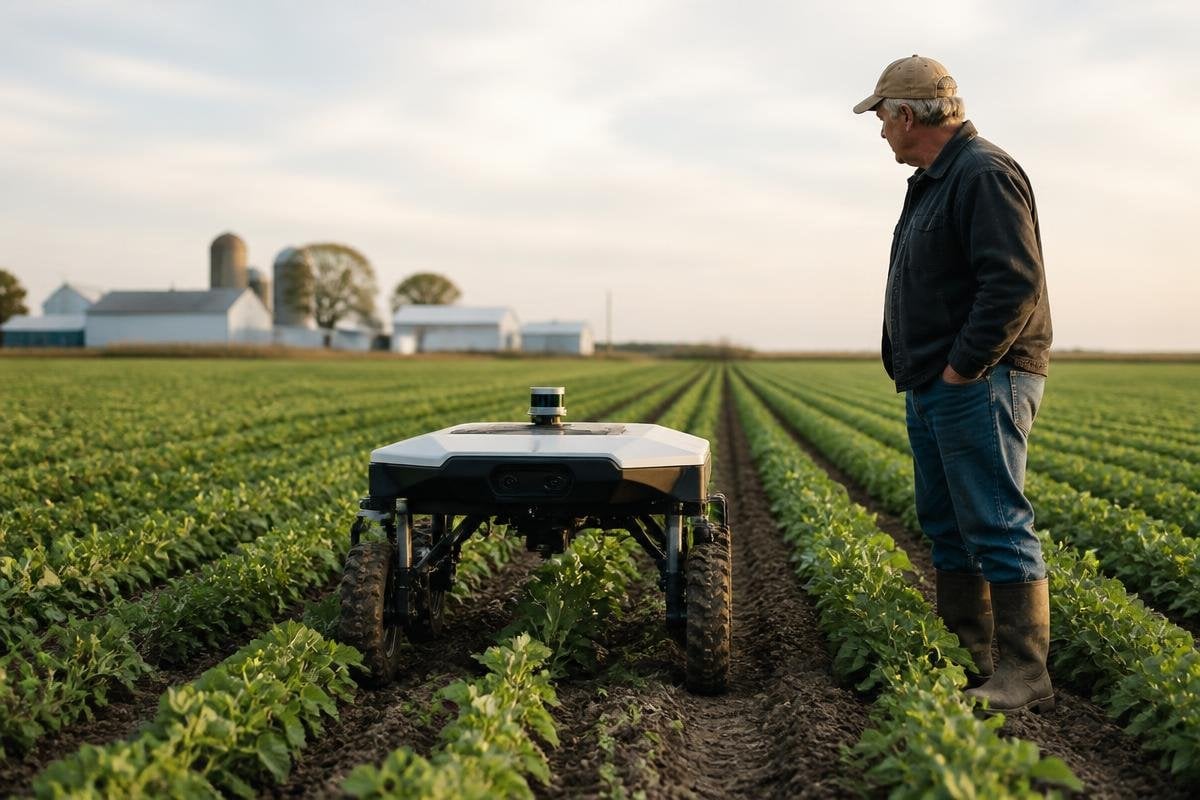
A farm robot won’t change rural work by replacing an entire job in one move. It will take on single tasks first, such as checking crops, carrying loads, or guiding a tractor along a planned route.
That shift matters because rural jobs often combine many tasks. A worker may drive equipment, inspect plants, repair a fence, and make decisions about weather and soil in the same day.
Quick read
- Robots are most likely to take on repeatable work before skilled decisions.
- Small farms may need shared robot services instead of buying machines outright.
- New jobs will involve setup, repair, remote control, and data checks.
The first jobs to change
Repetitive outdoor work gives robots their clearest starting point. A machine with cameras and satellite positioning can follow rows, check plant health, or remove weeds along a set route. The worker still decides where the machine goes and what action it should take.
Indoor farm work has a similar pattern. A robotic arm may move trays, sort produce, or carry feed. A milking system can handle a routine step, while people deal with animal health, cleaning, equipment faults, and decisions that need judgment.
Those tasks may reduce the number of hours spent on routine work. They don’t remove the need for people who understand the land, the animals, or the equipment around them.
What workers will do instead
As machines take on repeatable tasks, rural workers may spend more time supervising them. That can mean checking a robot’s route, reviewing images from a field, or stopping a machine when ground conditions change.
Remote control will matter when a robot reaches a problem it can’t solve. A person may guide it around a fallen branch, move it away from livestock, or send it back to a charging point. The work shifts from constant physical control to short decisions made at the right time.
Repair work will also grow in importance. Rural machines face mud, dust, rain, uneven ground, and long travel between buildings. Someone will need to clean sensors, replace worn parts, test software updates, and keep the robot safe around people.
For a farm owner or rural contractor, a useful report names the machine, its price, the work it did, and the repairs it needed. Robot24.com can point you to those details before the next section asks who can pay for the machines.
The cost decides who gets access
A large farm may be able to buy a machine and keep a trained operator on site. A smaller farm may need to rent a robot by the day, share one with nearby farms, or hire a contractor that runs the equipment for several customers.
That model could create rural work around robot services. A local operator might plan field routes in the morning and move machines between farms.
They could check the results after each shift. The job would combine equipment handling with basic data work.
The price is only one part of the decision. A farm also needs storage, charging, repairs, network access, and a plan for work the robot cannot finish. A machine that handles one crop but fails in wet soil may cost more time than it saves.
What robots still can’t handle well
Rural work changes from day to day. A storm can wash out a track. Animals can move into a work area. Crops may grow unevenly, and a planned route may no longer fit the field.
Robots can respond to some of these changes through cameras, LiDAR, and software that maps nearby objects. Their limits remain clear when a task needs broad judgment, physical repair, or a decision based on local knowledge.
Safety adds another condition. A robot working near people, animals, roads, or farm buildings needs an emergency stop, clear warning signals, and rules for who may enter its path. A damaged sensor can turn a routine job into a serious hazard.
A practical check before buying
A rural robot needs to pass these checks before a farm buys it:
- Name the task: Can the machine repeat one job with little variation?
- Check the ground: Will mud, slopes, dust, rain, or loose soil affect its sensors and wheels?
- Plan the handoff: Who takes control when the robot stops or meets an object?
- Count the support: Who charges it, repairs it, updates it, and moves it between fields?
- Price the full job: Include storage, training, network access, service calls, and downtime.
- Set a stop rule: Decide when a person must pause the machine and inspect the site.
I’d be cautious about buying a robot for a task that happens only a few days each season. A shared service may fit better until the work becomes regular enough to keep the machine busy.
The first rural jobs to change will probably be the ones with clear routes and repeated motions. The harder question is who will own the machines, and who will be paid to keep them working when the field stops behaving like a map.